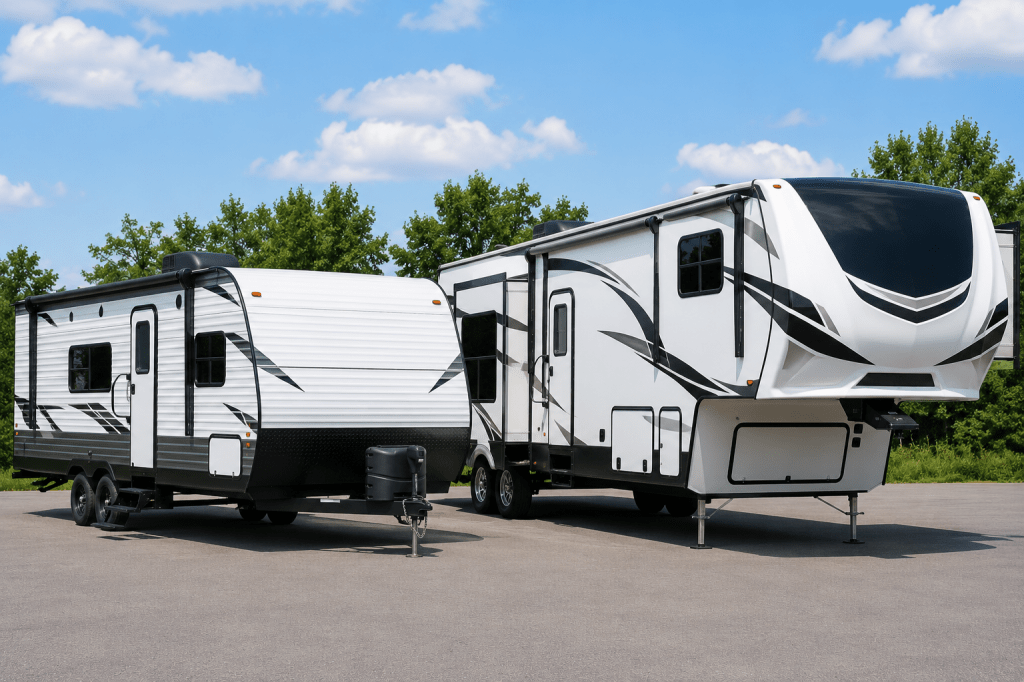
If you’re shopping for an RV, you’ve probably come across the debate of 5th wheel vs travel trailer towing. At first glance, many people assume a travel trailer is easier to tow because it’s often smaller, lighter, and less expensive. However, once you start talking to experienced RV owners, you may hear a different story.
So, which is easier to tow: a 5th wheel or a travel trailer?
The answer depends on your experience level, tow vehicle, budget, and camping style. While travel trailers offer more flexibility and lower costs, many RVers find that 5th wheels provide a more stable and confident towing experience.
In this guide, we’ll compare 5th wheels and travel trailers in terms of towing, stability, crosswinds, backing up, truck requirements, cost, living space, storage, and full-time RV living.
What Is a Travel Trailer?
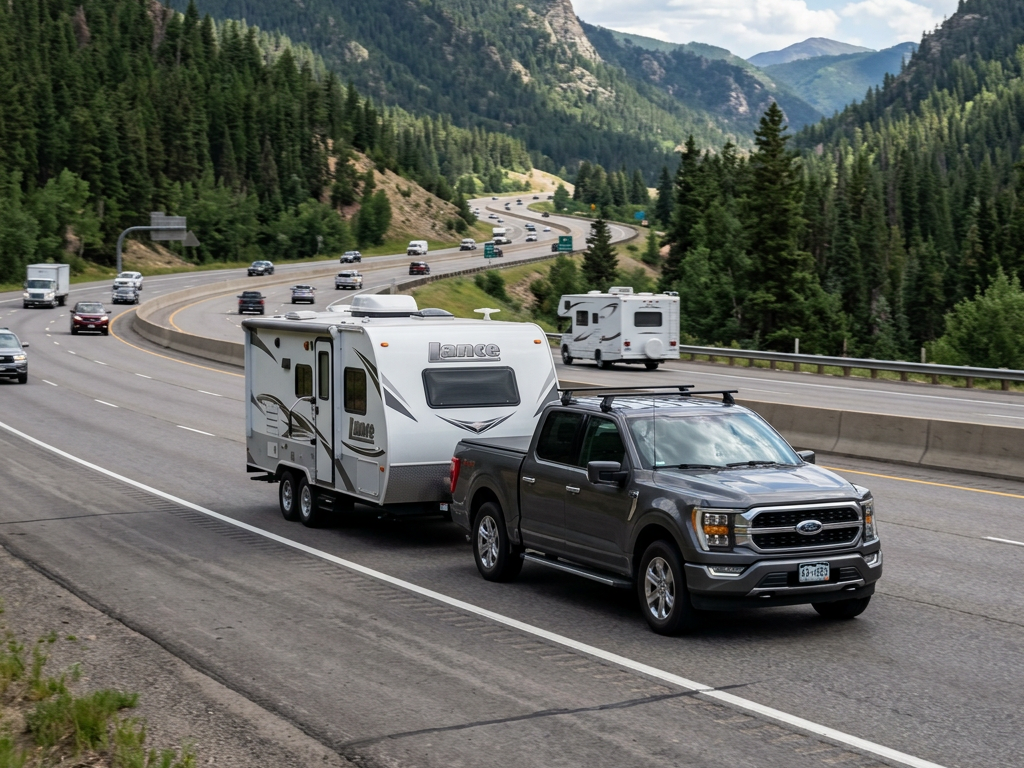
A travel trailer is an RV that connects to a hitch mounted at the rear of a tow vehicle. Travel trailers come in a wide variety of sizes, from lightweight models that can be pulled by some SUVs to large family campers requiring heavy-duty trucks.
Because of their versatility and generally lower price, travel trailers are one of the most popular RV types on the market.
What Is a 5th Wheel?
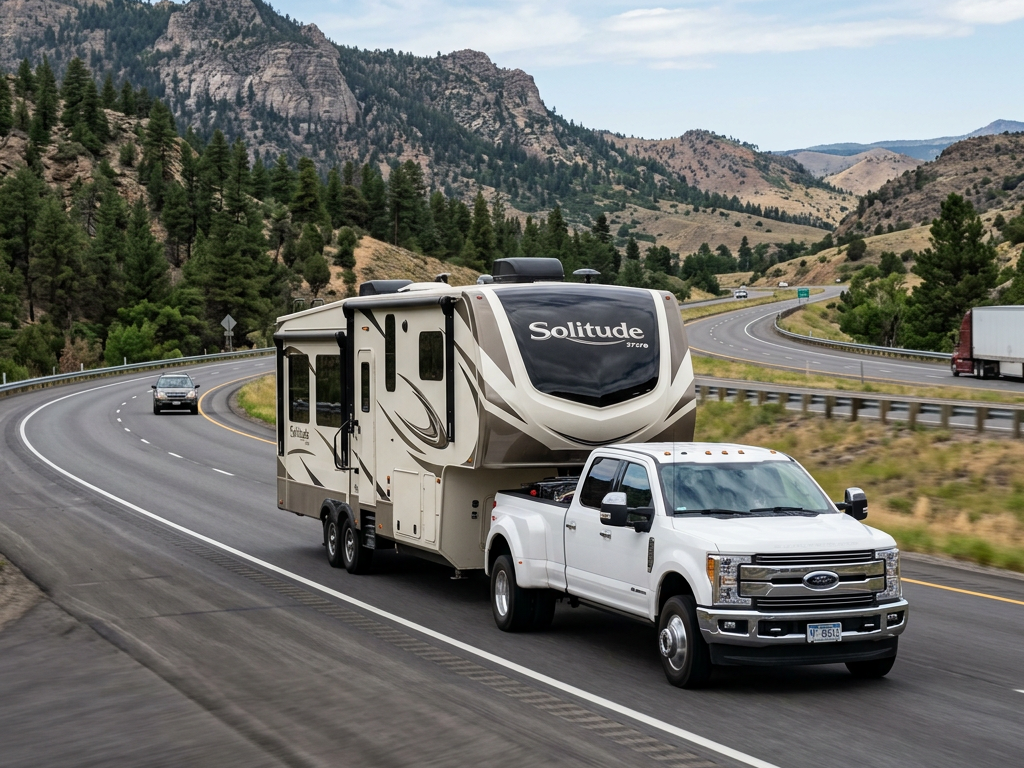
A 5th wheel is an RV that connects to a special hitch mounted in the bed of a pickup truck. Instead of pulling from behind the vehicle, the trailer’s weight is positioned over the truck’s rear axle.
This design changes how the RV handles on the road and is one of the biggest reasons many RVers prefer 5th wheels for longer trips and full-time living.
Quick Comparison: 5th Wheel vs Travel Trailer
| Category | 5th Wheel | Travel Trailer |
|---|---|---|
| Towing Stability | Winner | |
| Crosswind Resistance | Winner | |
| Ease of Backing Up | Slight Edge | |
| Hitching Simplicity | Winner | |
| Vehicle Flexibility | Winner | |
| Purchase Cost | Winner | |
| Living Space | Winner | |
| Storage Capacity | Winner | |
| Full-Time Living | Winner | |
| Overall Affordability | Winner |
5th Wheel vs Travel Trailer Towing Comparison
When it comes to towing, the biggest difference is where the trailer connects to the tow vehicle.
A travel trailer connects behind the rear axle, while a 5th wheel connects directly over the rear axle in the truck bed. This seemingly small difference has a major impact on handling.
Because the hitch point is centered over the truck’s axle, a 5th wheel tends to feel more balanced and stable on the road. Many drivers report less trailer sway and more confidence when towing at highway speeds.
Travel trailers can certainly tow well when properly loaded and equipped with weight-distribution and sway-control systems. However, they are generally more susceptible to movement from wind, passing trucks, and uneven road surfaces.
Towing Winner: 5th Wheel
For pure towing stability and driver confidence, the 5th wheel has the advantage.
Stability and Crosswinds
One of the most common concerns among RV owners is trailer sway.
Travel trailers have a longer distance between the hitch and the trailer’s axle, making them more vulnerable to side-to-side movement. Strong crosswinds or large trucks passing at highway speeds can sometimes be felt through the steering wheel.
A 5th wheel’s hitch position reduces much of this effect. Since the connection point sits directly above the truck’s rear axle, the trailer tends to track more naturally behind the truck.
This doesn’t mean a 5th wheel is immune to wind, but many RVers find it noticeably more stable in challenging conditions.
Stability Winner: 5th Wheel
Which Is Easier to Back Up?
Many first-time RV buyers assume travel trailers are easier to back into campsites. Surprisingly, that’s not always the case.
Smaller travel trailers can react very quickly to steering inputs, which sometimes makes backing more challenging for beginners.
A 5th wheel often responds more gradually, allowing drivers to make smoother corrections while reversing.
Of course, experience matters more than trailer type. With practice, either RV can be backed into a campsite successfully.
Backing Up Winner: Slight Edge to 5th Wheel
Hitching and Unhitching
Travel trailers use a traditional hitch system mounted at the rear of the tow vehicle. The setup is generally simpler and less expensive.
A 5th wheel requires a specialized hitch installed in the truck bed. While many owners become comfortable with the process, it usually involves more equipment and a higher initial cost.
For occasional campers who want a simple setup, travel trailers often feel less complicated.
Hitching Winner: Travel Trailer
Truck Requirements
This category is important because it affects both your RV budget and your vehicle options.
Many travel trailers can be towed by half-ton trucks and, in some cases, SUVs. This gives buyers more flexibility when choosing a tow vehicle.
Most 5th wheels require a pickup truck, and larger models often need a heavy-duty truck with substantial towing and payload capacity.
If you already own a suitable truck, this may not be a concern. However, buyers shopping for both an RV and a tow vehicle should factor these costs into their decision.
Truck Requirement Winner: Travel Trailer
Cost Comparison
In general, travel trailers are more affordable than 5th wheels.
Not only do travel trailers often have lower purchase prices, but they also avoid the added cost of a 5th wheel hitch and, potentially, a larger truck.
Maintenance, insurance, and registration costs can vary, but travel trailers are often the more budget-friendly option overall.
For RVers looking to maximize value while keeping costs under control, travel trailers are hard to beat.
Cost Winner: Travel Trailer
Living Space and Comfort
This is where many buyers begin to understand why 5th wheels are so popular.
Because of their design, 5th wheels often feature higher ceilings, split-level floorplans, larger kitchens, and more residential-style layouts.
Many models offer spacious living areas, large bedrooms, and additional storage that can make extended trips more comfortable.
Travel trailers come in many excellent floorplans as well, but they generally have less interior volume than a similarly sized 5th wheel.
Living Space Winner: 5th Wheel
Storage Capacity
Storage is often overlooked until you start packing for longer trips.
Many 5th wheels include large basement storage compartments that can hold camping gear, tools, outdoor furniture, and other essentials.
Travel trailers usually provide less storage space, particularly in smaller models.
If you plan to travel for weeks or months at a time, the extra storage in a 5th wheel can make a noticeable difference.
Storage Winner: 5th Wheel
Which Is Better for Full-Time RV Living?
If your goal is occasional weekend camping, either option can work well.
However, many full-time RVers choose 5th wheels because of the additional living space, storage, and residential feel.
The larger floorplans often make everyday tasks more comfortable, especially for couples or families spending extended periods on the road.
That doesn’t mean full-time travel trailers don’t exist. Plenty of people live happily in travel trailers. Still, when comparing the two side by side, the 5th wheel typically offers more comfort for long-term living.
Full-Time Living Winner: 5th Wheel
Final Verdict
So, which is easier to tow: a 5th wheel or a travel trailer?
If towing stability, highway confidence, resistance to crosswinds, and long-term comfort are your top priorities, a 5th wheel is often the better choice.
If affordability, flexibility, and a simpler setup matter most, a travel trailer may be the smarter option.
Choose a travel trailer if you want:
- Lower purchase costs
- More tow vehicle options
- Simpler hitching and setup
- Excellent value for occasional camping
Choose a 5th wheel if you want:
- Better towing stability
- Less sway in windy conditions
- More storage space
- Greater comfort for extended travel
- A better full-time RV living experience
At the end of the day, there is no one-size-fits-all answer. The best RV is the one that matches your budget, travel style, and towing vehicle.
Have you owned a travel trailer or a 5th wheel? We’d love to hear about your experience. Leave a comment below and share which one you prefer and why.
If you found this guide helpful, be sure to explore more of our RV articles for tips, comparisons, and practical advice to help you enjoy life on the road.
Best RV Membership Clubs in 2026: Which Ones Are Actually Worth the Money?
Wondering which RV membership clubs are actually worth the money? This guide compares Good Sam, Thousand Trails, Harvest Hosts, Escapees, Passport America, KOA Rewards, and Boondockers Welcome, explaining how each program works, who it’s best for, and how much you could potentially save on your…
Keep reading

Best RV Flooring for Pets: Durable, Easy to Clean, and Scratch-Resistant
If you travel with pets in your RV, you know how important it is to have flooring that can handle paws, claws, and the occasional accident. The best RV flooring for pets should be durable, easy to clean, and comfortable for both you and your…
Keep reading
Best National Parks for an Unforgettable RV Adventure
Exploring the great outdoors in an RV is one of the best ways to experience the beauty of America’s national parks. With the freedom to travel at your own pace and the convenience of having your home on wheels, you can fully immerse yourself in…
Keep reading

How to Stay Connected on the Road: Internet and Cell Service for RVers
Traveling in an RV is a wonderful way to explore the country, enjoy nature, and live a more flexible lifestyle. But whether you’re a full-time RVer or just taking an extended trip, staying connected to the internet and having reliable cell service is important. Whether…
Keep reading

Top 10 RV Kitchen Gadgets to Make Cooking on the Road Easy
Introduction Cooking in an RV can be a fun adventure, but it also comes with its own set of challenges. Limited space, fewer appliances, and the need to conserve energy and water can make preparing meals a bit tricky. That’s why having the right kitchen…
Keep reading
How to Solve Black and Gray Tank Problems in Your RV
Introduction Living the RV life is full of adventure, but it comes with responsibilities—and one of the least glamorous is managing your black and gray tanks. These tanks are crucial for handling waste and keeping your RV clean, but they can sometimes cause problems like…
Keep reading
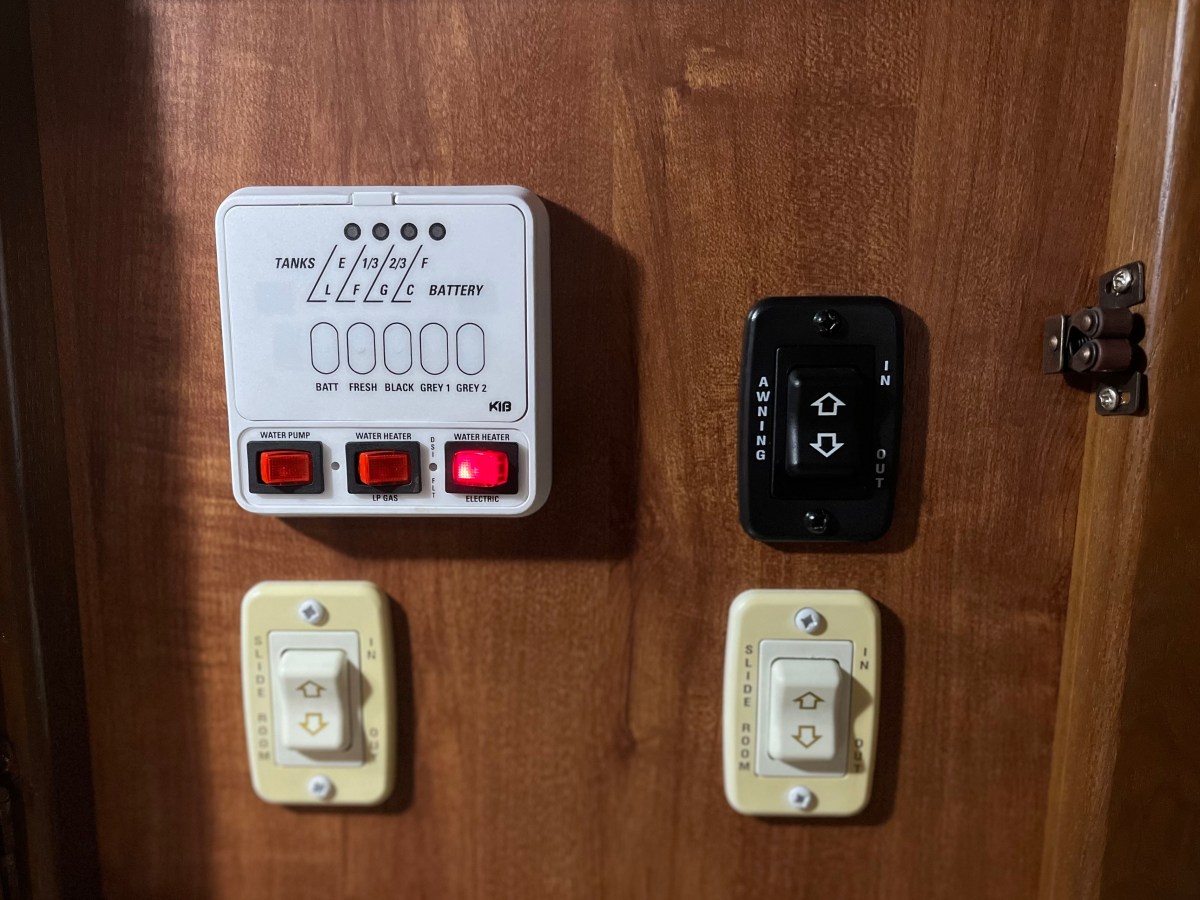
DIY Tank Sensors: Fixing Inaccurate Readings on Your RV’s Holding Tanks
If you’ve been on the road for a while, you know the struggle of dealing with inaccurate tank sensor readings in your RV. One minute your gray tank says it’s empty, and the next, it’s suddenly full—even though you haven’t used much water. Annoying, right?…
Keep reading

How to Replace the Screen on Your RV Screen Door
If the screen on your RV’s screen door is torn or worn out, replacing it yourself is easier than you might think! A fresh screen keeps bugs out while letting fresh air in, making it an essential upgrade for any RV owner. In this guide,…
Keep reading


Leave a Reply